
GRE Verbal Reasoning: Format, Question Types & Strategy
Master the three question types that test your ability to analyze, evaluate, and synthesize written material.
Understanding the GRE Verbal Section
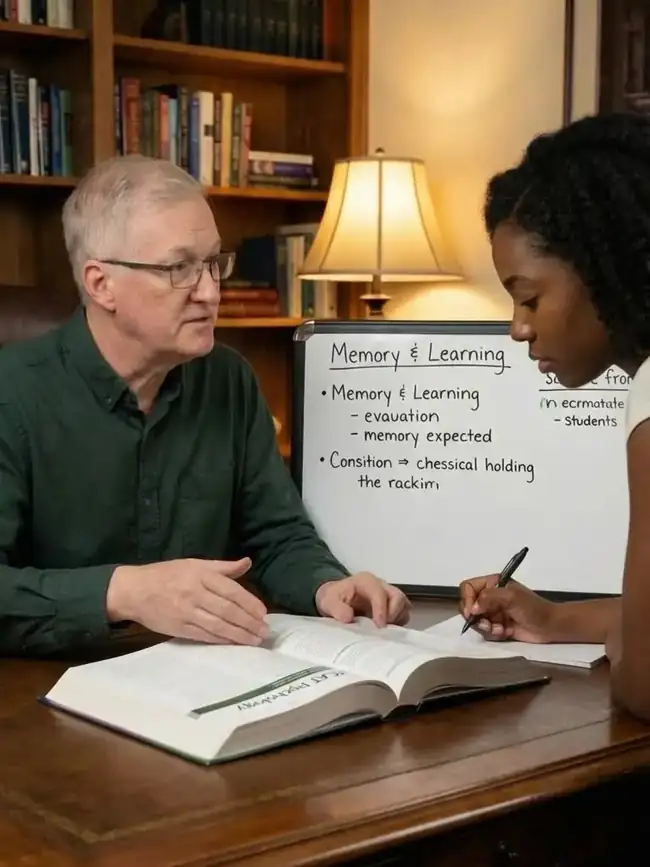
The GRE Verbal Reasoning section measures your ability to analyze and draw conclusions from written discourse, understand the meanings of words and sentences, and recognize relationships among concepts. It is designed to test skills that are critical for success in virtually every graduate program, regardless of discipline.
You will see two Verbal Reasoning sections on the GRE: the first has 12 questions in 18 minutes and the second has 15 questions in 23 minutes, for a total of 27 questions in 41 minutes. The measure is scored from 130 to 170 in one-point increments, and the test is adaptive by section: the first Verbal section is of average difficulty, and your performance on it determines the difficulty of the second.
The average Verbal Reasoning score is 151.4 (ETS, test takers July 2022–June 2025), and a 151 is the 43rd percentile. A 160 is the 82nd percentile and a 163 is the 90th. Competitive programs in the humanities and social sciences typically look for scores in the 160+ range, while STEM programs may have somewhat lower verbal expectations. See the full GRE percentile table.
The Three Types of Verbal Reasoning Questions
Each question type tests a distinct aspect of verbal reasoning. Understanding the specific demands of each type is essential for effective preparation.
Reading Comprehension
Reading Comprehension questions make up approximately half of the Verbal section. You will encounter passages ranging from one paragraph to several paragraphs, drawn from topics across the sciences, humanities, and social sciences. Questions test your ability to understand the main idea, identify the author's purpose, draw inferences, evaluate the strength of arguments, and analyze the logical structure of passages.
These questions come in three formats: multiple-choice with one correct answer, multiple-choice with one or more correct answers (select all that apply), and sentence selection, where you must click on the sentence in the passage that meets a given description.
Text Completion
Text Completion questions present a short passage of one to five sentences with one to three blanks. Your task is to select the word or phrase that best completes each blank to create a coherent, meaningful passage. For single-blank questions, you choose from five options. For two- and three-blank questions, you select independently from three options per blank.
These questions test your ability to interpret incomplete information, identify contextual clues within the passage, and understand the logical flow of ideas. There is no partial credit — you must correctly fill every blank to receive credit for the question.
Sentence Equivalence
Sentence Equivalence questions present a single sentence with one blank and six answer choices. You must select exactly two answers that both produce a complete, coherent sentence and result in sentences that are alike in meaning. Like Text Completion, there is no partial credit — you must select both correct answers.
The key to these questions is recognizing that the two correct answers are not merely synonyms of each other. They must create sentences with equivalent overall meaning when plugged into the blank, even if the words themselves have slightly different nuances in isolation.
What the Verbal Section Actually Measures
Analytical Reading
The Verbal section tests your ability to read actively and critically. This includes identifying the main point of a passage, distinguishing major claims from supporting details, understanding the function of specific sentences within the broader argument, and recognizing implicit assumptions that underlie an author's reasoning. Graduate-level academic reading demands precisely these skills.
Vocabulary in Context
Rather than testing obscure vocabulary in isolation, the GRE emphasizes words commonly encountered in academic and professional writing. Text Completion and Sentence Equivalence questions assess your ability to determine meaning from context, recognize subtle distinctions between related words, and understand how word choice shapes the overall meaning of a passage.
Logical Reasoning
Many Reading Comprehension questions require you to evaluate the logical structure of arguments. You may need to identify the evidence that supports a conclusion, recognize flaws in reasoning, determine which information would strengthen or weaken an argument, or distinguish between claims that the author makes and claims that the author merely reports or considers.
Information Synthesis
The ability to integrate information from different parts of a passage is a core skill tested throughout the Verbal section. You may need to compare perspectives the author presents, identify points of agreement or disagreement between views, or draw conclusions that require combining details from multiple locations in the text.
Proven Strategies for GRE Verbal Success
Reading Comprehension Strategy
Read the passage actively, focusing on the author's main argument and the logical structure rather than memorizing details. For each paragraph, identify the main point and how it relates to the overall argument. When you encounter questions, refer back to specific lines in the passage rather than relying on memory. Pay particular attention to transition words and qualifying language, as these often signal the author's true position.
Text Completion Strategy
Before looking at the answer choices, read the passage and predict what type of word should fill each blank based on context clues. Look for signal words like "however," "moreover," "despite," and "consequently" that indicate the logical relationship between ideas. For multi-blank questions, start with the blank that seems most straightforward and use your answer to help determine the remaining blanks.
Sentence Equivalence Strategy
First, read the sentence and determine what meaning the blank should convey. Then look for two answer choices that create sentences with the same overall meaning. Do not simply look for synonym pairs among the answer choices — this can lead to trap answers. Instead, focus on which words produce equivalent complete sentences when inserted into the blank.
Private GRE Verbal Tutoring with Dr. Donnelly
The Verbal Reasoning section can be particularly challenging because it requires not just knowledge but a refined approach to reading and reasoning that takes time to develop. Dr. Stuart Donnelly, Oxford Ph.D., has spent over two decades helping students transform their approach to GRE Verbal questions and achieve dramatic score improvements.
Dr. Donnelly's approach to Verbal preparation goes beyond simple vocabulary drills. He teaches students how to read passages strategically, identify the structural cues that the GRE uses consistently, and develop systematic methods for each question type that produce reliable results under time pressure. His students achieve an average score increase of 12–16 points.
Private sessions are available online via Zoom or in person at our office in San Diego. Whether you are starting from scratch or looking to push an already-strong score into the 160+ range, Dr. Donnelly will build a preparation plan targeted to your specific needs and timeline.